Showing posts with label Design Research. Show all posts

Wednesday, October 8, 2008

Understanding Food: Anthro-Design Research in DCC

Understanding Food: Anthro-Design Research in the DCC class at Bangalore
Prof M P Ranjan

Image 1: Presentation by the Tamilnadu group in session at the NID Bangalore Centre. The group chose to build a flow chart of their understanding and the presentation uses a “story-board” that was represented like a film strip from the Tamil cinema story as shown in the illustration below. The storyboard was personified by the image of “Annaswamy” their man from Tamilnadu, from childhood to old age, and the food for all seasons brought into sharp focus by the overlapping threads of their story.


The first assignment at NID Bangalore dealt with mapping ones own knowledge about food and each group had a particular bias from which their knowledge was to be mapped and shared with the rest of the class. As describer earlier this thematic bias plays a strong role on how the subject is addressed and it even shapes the perception of the situation and this was quite evident in the various interpretations that were exhibited by the groups, each working with Climate, Region and Culture, as their given bias for investigation and articulation. While I did not specifically tell the students that they were not expected to do elaborate research on their subject of food with the bias assigned to each group, they did not have the time to do such research and all the teams had to fall back on their well of knowledge that resided in their collective memories and from which they drew quite liberally through a process of brainstorming, categorization and articulation to show their models and constructs on the given subject FOOD – with the bias of Climate, Region and Culture.

Image 2: The ‘story board” shown by the Tamilnadu group who used the persona of a young Tamil software engineer to represent their understanding of the chosen theme of “Food from Tamilnadu” shown here as a life time story, a journey from the cradle to a ripe old age, very interesting indeed.


The Second assignment saw the groups fanning out to various places in Bangalore to carry out direct contact research in the mode of “anthro-design” with each group being assigned to a particular region State of South India. The assigned States were that of Tamilnadu, Andhra and Karnataka, each assigned through a draw of lots, which was done on behalf of the group by their student coordinator. The group members then went into a huddle and made a plan for gathering information and this information strategy played out over the next three days with the groups meeting and exploring Food and eating places in Bangalore, each looking at their respective State issues and trying to make sense of the vast field that could be covered by the omnibus assignment with very low definition and broad interpretation. As designers they were to investigate the subject directly from the field in live contact with ‘experts” and ‘stakeholders’ from whom they could get valuable insights about their assigned subject – FOOD from one of the three chosen States of South India.

Image 3: The Karnataka group looked at the business of Food and explored the various dimensions of Karnataka cuisine as well as the typical resources of the State as they had discovered through their engagement with their contacts and eating-places across Bangalore city.


The Udipi café, MTR – “Mavali Tiffin room” and Café Coffee Day success story played strongly on the minds of this group and shaped the story that they had to share with the class through their wall size model and their mega success stories of food and the potential for a revolution from the State of Karnataka to the world at large. Their presentation was located in the basement workshop space of the NID Bangalore Centre and they impressed with their scale and sense of structure that was achieved in their model.

Image 4: The Andhra group was shocked by the stories of poverty and distress that came from many of their contacts across the migrant labour now in Bangalore. Their installation, which is the appropriate term that can best describe the assembly of objects, sarees and posters that the group assembled to tell their story, was colourful and then filled with coloured light and everything turned red….


Making contact with live sources of informants in the field is so important for design students since it is important for them to learn that what they need is not knowledge of the kind found in books as much as getting a feel of the situation and in picking up specific insights that would give them a sense of direction and a glimpse of the way the trends shaped up in their area of investigation. It is here that anthro design as a subject area gets appreciated and some degree of competence is built up in handling such research where book based knowledge would certainly not fill the need. This kind of experience would be useful for design students and through these experiences they would also learn about research strategies to be used in the field and the whole range of processes of making contact, making observations, meetings and interviews as well as processing the rich data from the field in order to glean insights about latent needs and future possibilities are all critical for design education.

Prof M P Ranjan

Thursday, August 7, 2008

Goa Group: Fish, Boats and Beach as Metaphor

Image: Goa group with their massive model and metaphor representation with the Fisherman in the foreground and the Goa Tourist map and persona in the background.


While the Goa group had very rich palette of images to support their presentation it was their structure that was truly memorable. Using a radial structure they built their structure about Food, Inflation and the Economy with the Meta factors around the circle and the process questions along the radial axis. This gave them the possibility of using the rings to represent the various parts of their structure in a very interesting manner.

Image: Radial model of the rich structure by the Goa group with the Fish, Boats and Beach Metaphor with the Fisherman in the foreground.


The structure model was further strengthened by the use of small iconic images strewn all over the diagram that helped us locate the major ideas visually while getting an overview of the structure. The Move in understanding was huge. While the first presentation that was based on what the group already knew was skewed towards a sort of outsider view of tourist Goa the second round saw the group connecting with all the right kinds of people who can be called experts and this led to a huge shift in understanding.

Image: The Goa team making their impassioned presentation with all members taking the stand and making a pitch with a very high level of motivation.


The presentation which had all the team members participating was truly memorable and of a very high quality. In the teachers experience this is by far the best effort in many years in the PG programme at NID. I would request the students involved to make a textual note of their experience and to share this with all of us so that this experience can produce durable learning that Prof Bruce Archer had told us about when he visited NID in the early 80's to give the Sir Misha Black Award for excellence in Design Education to the then Executive Director of NID, Ashoke Chatterjee. He told us that experience by itself does not produce knowledge, but it is the reflection on experience that does create deep and durable knowledge.

This assignment is therefore a way for groups of individuals to first map out what they already think they know about any chosen subject through brainstorming and categorisation followed by rounds of modelling to find structure and finding a suitable metaphor to map the discovered structure for all to see and understand. The next assignment has the students sharing their understanding with real experts and through research and the process of modelling, finding structure and making a metaphor so that the findings can be shared in a coherent manner. This process also has the effect of clarifying the concepts in ones own mind as well as in locating insights that would drive the process of opportunity mapping and decision making as the design process goes forward.

The other two groups too have completed their second round which will be reported here later in the day. We need to meet today to review all the MeBoards, perhaps in the SDM studio and the final opportunity maps as well as the individual secnarios will be exhibited in the NID Foyer on Tuesday the 12th August 2008 at 5.30 pm IST. We have booked the Foyer space through the NID Academin Administration and we look forward to a live participation from faculty, students and invited guests.

Friday, July 25, 2008

Information from the Field: Presentations by Groups

Information from the Field: Meeting Experts in the Field


Punjab


The Punjab group occupied the NID Gandhinagar Auditorium as their presentation space and transformed it into a truckers paradise with a mandi ( a market) and a dhaba (a roadside eatery usually on the highway) on the side of a highway with the front of a truck at one end and the back of another at the other wall, both connected by a line of trucks marked on the ground, each representing a particular aspect of the theme, Food and Punjab economy. The group had earlier done their brainstorming to articulate what they know about the subject as a group and they had built a model and transformed it into a metaphor that could capture the essence of what they had discovered that they know. Based on this model they developed a research strategy to search for ‘experts in the field” who were accessible near Ahmedabad and Gandhinagar or those who could be reached in the brief time available by phone or through the web so that they could fill in gaps in their understanding of the context as well as obtain insights that they could use in the next phase of their design journey which would deal with the identification of design opportunities in their chosen space. The larger than life image of the truck front was anthropomorphized with the turban of a Sardarji, the Sikh driver who would represent Punjabi persona for the rest of India. The back of the receding truck at the other end of the room had panels that helped categorise the key issues that the groups had discovered and prioritized after their meetings with the experts, people from local dhaba, Gurudwaras and from Punjabi households near their school.

While the team efforts at visualization was highly appreciated by the per group reviews the presentation had the feel of a White Paper used by Planners. Here the critique focused on the depth of macro- issues that the group had brought to clear focus but what was missed was the texture and feel of the micro aspects dealing with food from Punjab, the taste the content and the opportunities that these represented for design action in the future.


Kerala


The Kerala group persisted with their Boat House image for their second presentation and on the wall of the house-boat they had a structure mapping the various relationships that they had discovered during their engagement in the field with numerous Malayalees living and working in Gandhinagar. These people from Kerala had an association of about 1500 people mostly working in the Government of Gujarat and some who acted as service providers retailers and provisioners for the community from Kerala to meet their special needs. The structure was far improved version of the one they had presented in the first phase but still lacked the particular details that were so critical for design understanding. The group did attempt to make a list of design opportunities but the cloud and birds in the sky in one corner of their model was not enough to capture the richness that lived in their minds but was however not visible to the others outside the group. The group did develop a good deal of discussion with their presentation and it was becoming evident that the whole class was getting clued in on the finer aspects of design discourse since there were lesser questions for clarification and more incisive comments on the subject and content of the presentation from the class participants.

The impressive image was indeed huge in scale and the bananas and coconuts used in the diagram did capture the feel of Kerala from a distance but the finer aspects still eluded the group in their representation although the descriptions made by individual members did show a much deeper understanding in their minds but this did not show up on the image. This was pointed out to them as a missed opportunity in the attempt to show and tell. Words alone may not be as expressive as those supported by image scenarios that could deal with the form along with the structure while the story unfolds as the presentation progresses.


Northeast


The Northeast group also took the first tentative steps of building a terrace cultivation model in the first presentation to a more expressive model of the terraces using a three dimensional construct to represent the fields on the hilly landscape and with a backdrop of hills to represent the potential and the findings from their foray into the field to meet experts. The group had visited several local institutes in search of people from the Northeast and through this they did connect with some new and interesting insights about food and the local economy. However the approach did not help the group visualize the finer aspects of their findings since the model did not have any images dealing with the words that they had used as sign boards that were stuck onto each layer of the terraced fields in their model. Like the Kerala group they too had succeeded in making a well categorized structure of their findings with each zone in their model dealing with one major category but the visualization opportunity was however missed. Further as the team members made their presentation each of them would read out from a list in hand and they did not use the model as a prop for their show and tell which made the presentation less memorable for the audience since although we had a huge model in front of us the group did not use it to make their presenation. However such failure was useful for the teachers to make the critique which is good learning for all the class.

The group did emphasise the huge cultural diversity of the region and the diversity of food types and the range of tribes of the region, which represented a great opportunity for exotic offerings from the region as a whole. This group had an area that was less known about and with fewer experts to be found at short notice and they however had to do a lot of imagination to fill in the gaps in information from the field.


Gujarat


The Gujarat group was the most fortunate on the one hand since they were immersed in the region that they had to study but they were also disadvantaged by the short time that they had to do their research. The presentation of the group used two powerful images, one of a dancing Garba Girl in her traditional dress of Gagra and Choli with a Dupatta and the other with a map of the region that was overlapped with some of the key industries and infrastructure that contributed to the food economy of the region. This model was particularly expressive and the team was able to use the images to good effect in making their presentation memorable. The various parts of the dancing girl were used to categorise their findings about the food habits of the Gujarati and also about the various food types that the region had to offer. They explained their findings with a great deal of conviction about the organization of the food types and then went on to map out the areas of opportunity for the Gujarat region in the whole spectrum of Food related economy that includes the dairy industry, the fishery industry and the vegetarian snack food industry which uses the specific advantages of the Gujarat geography, culture and location as well as the entrepreneurship of their people.

The Gujarat team presentation was particularly rich since they were able to transform the class understanding of the use of personas in the capture of insights from the field. They met up with several well chosen individuals who were modeled in the form of personas and the story of these individuals helped capture the abstract information in the form of real and tangible insights that were informed by a particular context in which each of them were situated. So Induben, Amit Patel, Nilesh, Bhavana and Tasneen each offered a rare but coherent insight that the team was able to bring back to support the arguments that the team had to offer during their show and tell session in the class. The Amul Girl featured in their model just as the SEZ that is now the talk of the town in Gandhinagar and Ahmedabad and the Gujarati thali and the Farsans or fast food of Gujarat all had their place in the map that the group had on offer, a rich and visually stimulating insight indeed.

Sunday, March 23, 2008

Design Opportunity Mapping: Coastal Maharashtra India

Image: Terrain model to capture and present Design Opportunity Mapping for effective water conservation and management in Coastal Maharashtra, India by the DCC team.

The Coastal Maharashtra team used a terrain model to locate all the design opportunities that they had arrived at as a group using the small A5 size format that was provided to them. Each member of the team presented their ideas to the class and this was preceded by an overview of their categorisation of these opportunities. Then teachers too gave their comments and the critique from the class suggested ways forward from here.

This method of working has been found effective in getting a deeper understanding of the macro and micro issues and opportunities for design as part of this course at NID. Each group spends time brainstorming, researching and exploring collectively as well as individually before the findings that may be intermediate in nature to the rest of the class. Each group shows interesting insights that are discivered along the journey and these form a cumulative learning for the whole class since all five groups look at diffetent regions or areas of focus within one macro problem area at a time.

Thursday, March 20, 2008

Business Models from the Field: Chaiwalla.com and DCC

Learning about Business Models from the Field: The Chaiwalla.com assignment and DCC
Image: Prof. M P Ranjan explaining the Systems Design Model to the DCC class. This four stage process includes User studies, Scenario Visualisation, Concept Detailing and Business Model development.
Several years ago, as part of the DCC course, we realized that strategy and planning were as important as concept and product detailing if a particular set of design offerings were to be successful in the marketplace. Unlike technological innovations and science innovations which can be proven in the laboratory or be subjected to peer reviews for validation, design innovations and design offerings are of a class that can be measured and the success of which can only be tested in the marketplace and this makes it truly complex to prove. The producers who have almost the same quality of product on offer can only differentiate their offering by the thoughtful development of their business models. So we see objects being converted into a service offering through a lease finance model or a service being dematerialised through the use of technology and the shift could be in either direction and the winner is the one who can capture the imagination of the consumer and offer a special convenience that the other is not able to offer.

Learning business processes is seen as the exclusive domain of the management graduate and not that of the designer, however as teachers at NID we realized that without this knowledge being integrated into the product creation and development process, the impact of the new product or service offering would be essentially incomplete. This led to the creation of the four stage systems design model that I presented at the CII-NID Design Summit in 2001. This model was several years in the making and was an implicit part of the DCC assignments over many years before it got formalized in the Design Summit paper and presentation which is called “Cactus Flowers Bloom in the Dessert”.( download pdf: Part 1 of 3.6 MB and Part 2 of 4.6 MB and paper of 123 KB) Much earlier, in 1998 we had asked a group of students in the DCC class to go out onto the streets of Ahmedabad and study several street food vendors in working groups and come back to the class with an understanding of their business processes and strategies. We called it the Chaiwalla.com assignment and it was an instant success since we realized that the students were indeed able to observe, interact and understand the structural, functional and performance attributes of the business particularly since these were small and micro enterprises that were managed and effectively carried out by one entrepreneur with a small team of supporters, many from within the family itself. We have offered this assignment to all batches since then and the learning from the explorations and presentation that go across three or four days is very rich indeed. The contacts in the field, we found, were also open to share much information and insights with the students, but there were others who were either suspicious or indifferent to the needs of the students. On their part the students learned how to be diplomatic and deal with the very public interactions with care and empathy. Besides learning about fieldwork and about gathering information first hand from the live subjects the students also developed insights about start-up entrepreneurship and how some of these individuals learned to cope with poverty and to deal with it rather effectively. The revelation that the students usually came back with was that some of these individuals earned more each day than their teachers, their own parents in some cases or even officers in very respectable and well known large business enterprises.

The assignment that evolved over the years included the forming of five or six groups, each being assigned to research one kind of street food vendor through direct contact and observation in the street. Students were briefed about various issues to be kept in mind while making these field observations and in the interviews that followed The criteria for the selection of the vendors would be based on a quick survey of a number of such vendor locations and to seek out the ones that were basically cooperative as well as those who provided some significant attribute such as proximity to public facilities, apparent success by the customer draw that was exhibited in the preliminary observations, and the presence of other differentiators which the group feels would be worthy of deeper examination. Over the years we have had our students look at Street Tea vendors (The Chaiwallah), Omlette makers (Omlettewallah), Fried Bhajiya makers (Bhajiyawallah), Paav Bhaji wallah (Fried Bread and mashed vegetables), Golla wallah (Crushed ice on a stick), Pani Puri wallah (Puffed Puris with a sour dip) and so on, all favorite Indian street foods, all served from Laris or informal carts, by small and micro business enterprises, each run by a poor but determined individuals who is trying to build a livelihood in a harsh socio-economic environment.

Each group of students are required to make repeated visits to the chosen locations for observation and use the insights to model the flow of resources, finances and build an understanding of the visible as well as intangible assets and processes that have been incorporated to make the particular business a success. Through the interviews that are also required to get an understanding of how the story pans out across the year or a longer period and in some cases get an understanding of the history of the establishment and its various successes and periods of crisis, of which there are many being so exposed to the vagaries of the street environment that is at once full of opportunity as well as challenges. This collective understanding is to be mapped out using the group processes of discussion, dialogue and modeling from which would emerge a coherent model that can be worked into a suitable metaphor that can be used to share their understanding with the rest of the class. The students would be required to make a rich visual representation of their model in the form of a wall size poster for presentation and this would be used as a prop to explain the concepts that they have gathered about the particular business that they have studied. Teachers use this opportunity to connect the students to possibilities for further study and they are in turn quite ready to follow up on these leads since the learning from the field is quite deep and highly motivating as well. We look forward to seeing how this particular batch respond to the field study challenge particularly since it happens across the Holi festival weekend with all its associated distractions, but we are sure that they would stay focused and get the job done in time. Only time will tell.

Monday, March 17, 2008

DCC2008 Students in the NID KMC: Subject Water

Image: Foundation stufdents in the NID Knowledge Management Centre looking at a variety of published and archival resources about their theme, WATER.

The DCC2008 Foundation batch spent the day in the NID KMC carrying out research on the various categories of resources that are available in the Library which is called the KMC for short. They looked at the variety of resources that are available here after having put together a list of keywords and having broadly dividing the field into manageable areas amongst the team members, at least those who had agreed to participate, I did not see all of them in the KMC when I did my rounds with the camera. Some went to the Computer Centre and checked out Google and Wikipedia as well as other web resources and yet others met faculty at NID for very specific questions that needed to be addressed.

I look forward to the meeting with the class tomorrow and to an intensive work session during the week ahead and through this I do hope that we can build up a credible inventory of design opportunities in a massive list that is also organised and presented in a manner that we can share with the rest of the Institute and in the process influence future Diploma Projects at the NID with some of them being done in this critical area of water resource conservation and the culture of water for the future. This is indeed the very first stage in the design process, which is finding and sensing design opportunities and deciding what is worth doing and what can be done with the available resources and constraints, through the application of strategy and imagination and the designers sensibility, all part of the design journey.

Sunday, March 16, 2008

Information Strategies for Research: Their role in Design Thinking and Action.


Information Strategies for Research: Their role in Design Thinking and Action.

A variety of information would be required as we go forward with a particular design initiative. In this case we are looking at water as a subject and at the role that it could have in facilitating people living in the five selected zones across our country. We have taken this as a subject so that as a group we can engage with a process of articulation, clarification and research that would help us understand the field of design and in particular design opportunity.

Water has many forms and numerous uses and it is a critical resource for human existence. However it is not taken very seriously and we are seeing wide spread pollution of our water resources as well as gross misuse by individuals and industry alike. This shows us that there are many opportunities for design action in this space since for each problem that we are able to recognize and articulate we can offer many different solutions with the application of our imagination. The assignment was therefore a method through which all the students could understand how a particular area of focus could be explored by a group and from this how we can discover numerous design tasks that can be done to help solve one or other aspect of the problem. This will of course be seen that the issues to be handled could be small scale and fairly clearly articulated problems or large scale and extremely complex problems. It is only when we have an inventory of challenges along with an inkling of what we can possibly do in this situation do we have the beginnings of a list of design opportunities that deal with this.

While we try and tackle such wide ranging design problems we would necessarily have to deal with many kinds of knowledge as well as many disciplines of design to try and address these issues successfully. Some may well be outside the scope of the fields that each one of us may be capable of handling with our limited knowledge and skills but this does not make the problem either irrelevant or something that cannot be solved. This is where the role of imagination comes in to play and where conventional wisdom gives up we have seen repeatedly the emergence of break-through concepts emerging that can help look at the situation in a new way and this may open up avenues for new classes of solutions. Further, each design discipline could take up a particular design problem and find different approaches to address these towards a lasting solution. For instance the solution could be in building awareness amongst the users and not just in building new tools and processes for society to use. Awareness building could be through addressing the information needs of children with books, illustrations, films, plays and multi-media offerings or through reaching out to policy makers through traveling exhibitions, websites and visually rich presentations that have a real impact on the mind and that can bring a new understanding of the complex situation at hand and therefore help in a decision to be made. At this level the design actions can be very political while at other levels it would be seen as the application of the skills of composition, colour and form in a sensitive manner that the designer is always expected to do by virtue of their training and sensitisatioin to issues and outcomes that are desirable.

The information needed is quite varied and can come form many sources and each source would require the design student to develop a different skill in managing during research. Research from books would need the skill of working with keywords and in the use of indexes and library resource maps such as access books and encyclopedias and dictionaries. A good place to start research is in text books from a particular field and in some cases when the subject is unknown to the researcher it may be wise to start with childrens books on the subject and move from there to the more specialized and scholarly works. One could make a list of thought leaders in any given subject and today it is very easily provided by a quick review of the intrernet resources and in this case the Wikipedia could be a great source to start research with a set of key-words as a starting point. In the age of information getting new data is very easy but making sense of data is the real challenge. This is where meetings with users, subject experts and domain level experts could be a great help. Students could go out of their class and meet real people who are likely to provide insights about the subject and in design this is more important that tons of information. All the information thus collected by the students working in groups would need to be organized and structured into an information model that can be shared with all the class.

Wednesday, March 12, 2008

Water Harvesting and Village Study Visualisation

Village Study Visualisation Water Harvesting: As a Case Study Presentations in the DCC Class
Image: Sumiran presenting his Village Study Maps and Models to the DCC class today.

The DCC2008 class was given a treat today with two very inspiring presentations from two NID graduates, Sumiran, a graduate from the SUID programme in Gandhinagar and Dinesh Sharma, a graduate in Product Design from the NID, Paldi campus. Sumiran shared the work of his team on the manner in which they carried out a village study in a selected location with the intention of visualizing the data in an expressive model such that it could be the foundation for a new web based system that could help understand the resources and aspirations of any village in India. The Data Visualisation team had chosen Sahpur village in Gandhinagar using Google Earth as a reference resource and due to many attributes that this particular village had for carrying out their survey. He shared the strategies that the team had adopted as well as the lessons that had been gleaned as insights from their experience. This reflective presentation was also intended to give the Foundation students a platform for their own reflection on their Environmental Perception experience at Dholka town as they went further with the various assignments during this DCC course. The whole area of design opportunity mapping and then modeling these in the form of an associated set of icons and symbols that were used to capture the insights on a map that had some basis for suggesting a new software proposal that could be applied to many other situations was explained as a case study.

Image: Dinesh Sharma explaining the concepts and business processes developed for the Furaat Rain Water Harvesting system that he designed for an Ahmedabad based company.
Dinesh Sharma on the other hand took the students through a very inspiring case study of the Furaat Water Harvesting system design and the business models that the company had explored to realise their design vision as well as their plans going forward. Dinesh told the group that the promoters of the company had come into this particular activity after the 2002 riots of Ahmedabad had completely destroyed their former business of tube well drilling and the two brothers had to literally build a new business from scratch. It is here that they started looking at water harvesting as a business opportunity as well as an avenue to make sense in society. They had approached Dinesh and his design-consulting firm, Isiliye Design, to help in cost reduction and product detailing to start with. However after he got involved the entire system was built from ground up as a new and innovative offering that addressed all the systems level complexities in a manner that the construction became simple, the costs were reduced at many stages of production, transport and maintenance and the product was made modular and easy to use and manage. Dinesh also spoke about the philosophy and ideology that has driven this project from the very beginning and the practical business aspects that were kept in mind while the projects were being designed and executed in the field. Today over 500 installations later a whole new set of insights have been developed and a lot of conviction about the direction have come about as well.

This presentation also came as a useful peg on which the concept of Design Opportunity could be understood by the students and the DCC model for perception and imagination was shared with the class. The rich Q & A session that followed set the stage for the follow up work that would be done by the groups of students and we look forward to their group presentations in class tomorrow.

Tuesday, March 11, 2008

Design Opportunities in Water: DCC2008 Assignment

Design Opportunities in Water: Looking at the five Indian village types as part of this course
Image: Furaat Water Harvesting system designed by Dinesh Sharma an NID graduate in Product Design.

Yesterday we talked about water and the need for the design community to look closely at this resource that is becoming increasingly scarce as population increases and we tend to use more technology to extract this very limited resource in an unsustainable manner. The key word is sustainability and with imagination and design creativity we can and must find ways to reduce, recycle, recharge and reform the manner in which we think about and use this precious resource. Anita Roddick in her book “Troubled Water” tells us how critical water is to sustaining human life. She says, I quote, “Water is more fundamental than any other substance on Earth: You can live three weeks without food, but without water you’ll be dead in three days.” UnQuote

We also talked about the conversation that Hazel Henderson, futurist, evolutionary economist and author had with Daisaku Ikeda, president of Soka Gakkai International, a Buddhist association to promote peace in their book titled “Planetary Citizenship”. Here the attitudes that were needed to shape values, beliefs and actions for a sustainable world are discussed as an extended dialogue that covers insights form both authors from over 80 years of individual experiences. Their belief that the individual can shape a sustainable world is at the heart of this dialogue. Water is a repeated theme across the book and the need to conserve, share, and protect water as a critical human resource is repeatedly addressed across the many themes that are discussed by these visionaries.

We talked about the work done by Dinesh Sharma with the Furaat Earth Pvt. Ltd. In Ahmedabad over the past three years and used this as a starting point for our collective brainstorming about what the design community could do about this very critical resource, particularly for our village economy. The traditional wisdom of the manner ion which water has been used in the dry regions of Gujarat and Rajasthan have shown many sensitive and durable ways of conserving and using water for the benefit of society. These were also ecologically sensitive and have held the local populations in good stead for the past hundred and even thousands of years. The village pond is a critical method that has been used in all our villages to recharge the ground water as well as to hold surface water for use to feed cattle, for agricultutre as well as for washing and other tasks. The village wells are usually located near the aquifers that are fed by the ponds through a slow filtration process that works unseen below the surface of the pond.

We also spoke about two of our graduates in Baroda (Varodra), Mala and Pradeep Sinha, who have a textile design company which recycles and reprocesses all their water before it is let out into the environment in a high quality discharge. Pradeep had designed India’s first commercially available water filtration system using the Reverse Osmosis process. The e product was launched by the Baroda based company and soon thereafter Symphony took up the marketing of these products on a nation wide franchise agreement.

The task given to our student groups was to brainstorm and research the whole area and come up with design opportunities that can be taken up by seniors across all the disciplines at NID in the Industrial Design, Communication Design and Digital Design disciplines. The presentation is scheduled for the 12th March 2008.

Thursday, February 28, 2008

Nature of the Design Process: Systems Thinking at NID

Nature of the Design Process: Systems Thinking at NID

Image: Four stage model of the Systems Design process.
Rather than following a single big idea I believe that designing is about following a number of related concepts and in exploring the opportunities that the design space offers you. It is about the insights that your own imagination brings to the surface as you continue the journey while sensing the environment and the situation that surrounds the particular opportunity. This is why the outcomes are so unpredictable but if you persist and remain sensitive to the insights you will eventually develop a set of convictions that will prompt you to act in a particular manner and then subject these explorations to a number of tests as these are evaluated in the progressive stages of the design process.

In my model of the design process, which I teach my students at NID during the Design Concepts and Concerns course, I offer a four stage model where the User Research leads to Scenario Visualisation and this will bring to the surface many ideas and concepts that can be shared with users and others as the work progresses. These concepts and models can be subjected to debate and discussion as well as detailed modeling and testing till you are ready to invest time and effort as well as develop the basis for obtaining the costs to detail out one, two or more of these scenarios and subject these to further testing, all usually done in rapid succession. So, in this way designing is an action oriented work where research is invariably interspaced with action of modeling and discourse as well as a good measure of discussion and debate based on which your insights and convictions would develop more fully and you will then make some decisions about directions and goals that need to be reached. Both goals and possible solutions as well as means of achieving the goals are co-developed or co-evolved as the work progresses.

The third stage is Concept Development which takes a substantial amount of time and money in a business situation. Here the detailing of some promising concepts are taken up in a systematic manner and this can take a good deal of time effort and cost and the fourth stage is to develop Business Models that can help realise the concept in the real world. I have these models on my website and you can download these as pdf files if you wish from the site below from the Design Theory section of the website:


By the way I have posted another story today on my blog about my experience in Madras in 1974. Take a look. This an the previous posts show case studies of design action in the real world and the impact these can have on a business situation, particularly in a small scale industry setting.

Saturday, October 6, 2007

Sustainability and Social Equity as a Design Challange in India

Undersdtanding the Known Universe: Assignment on Sustainability and Social Equity as a Design Challange in India

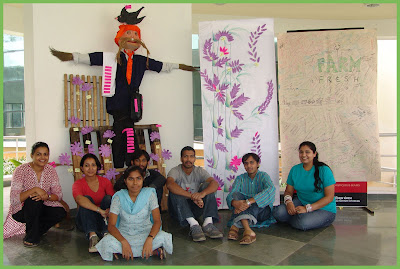
Images: Students sharing the work presentation at the end of assignment one in the DCC course at Bangalore.

The students of NID R & D Centre at Bangalore from the Retail Experience and Digital Experience disciplines were assigned the task of exploring the areas of three key sectors of employment to discover how the supply chain could be strengthened by design approaches to ensure both sustainability as well as social equity across the following sectors:

1. Handmade Products and Handlooms team with their models

2. Farm Fresh Produce team with their models

3. Dairy and Poultry Products team with their models

The groups were asked to brainstorm and then categorise the various dimensions of these sectors so as to capture the known factors and attributes so as to understand the sector as a system which could then be inmproved from the stated goal of achieving both sustainability as well as social equity in the age of rapid globalisation and urbanisation that is sweeping the country today. This understanding was then to be used to develop design opportunities at a leter stage in the Design Concepts and Concerns course at the Bangalore Centre of NID. The two new disciplines at Bangalore are doing this course for the first time and the attempt is also being made to integrate the areas of focus of both groups at the Centre as well as the interersts of the students in each group. Groups were formed by choosing volunterr coordinators and they in turn selected the teams to make these multi-doisciplinary as well as with a gender balance in each group to get the required variety on the teams.

Image: Detail of one of the models by the Fresh Farm Produce Group

Each group made their brainstorming sessions with a lot of passion and committment and then spent a good deal of time in categorising their findings over a period of two days of intense activity. The teams then prepared a structure that made sense to them and based on the agreed structure they developed a rich metaphor to capture all the dimensions of their assigned sectors.

Rashmi, who is in Ahmedabad, shared a wonderful set of links from the Open University in the UK on Systems Modelling and Diagramming and the students have been requested to explore these links to study the theory of modelling and diagramming types through the rich multi-media presentations available at these links below:

What are Spray Diagrams?
What are Rich Pictures
What are Systems Maps?
What are Influence Diagrams
What are Multi-Cause Diagrams
What are Sign Graphs

These are not to be treated as frozen methods to be followed but as a guide to understanding and each experience will show the student their own way forward and give then an ability to make their own models and diagrams which are best suited to their task as well as one that can be achieved within the constraints of the skill sets available to the group with whom they are working.

Image: Teachers explaining the next assignment dealing with meetings with experts as well as strategies for gathering insights from the field.

Sunday, September 23, 2007

What is Sustainability? What are the Design Opportunities for India?

SUSTAINABLE DESIGN FOR INDIA
The issue of understanding sustainable design has had the five groups of students working very hard over the week and the weekend and we were able to complete all the presentations on saturday. Today I have been able to post on my advocasy blog called "Design for India" a note on Sustainability as a Principle for Design Action in India, take a look.

The presentations done by the students groups are shown below. The next stage would be in exploring the areas of uncertainity and the unknown by making some research moves into the field as well as into published resources using the present understanding of the group as a starting point. The purpose is to move forward and understand the finer details while getting a better grasp of the big sweeping conception of both global as well as historical perspectives that may apply to the task area and the sub-field that the groups is addressing. Sustainability is a very complex concept and it may be useful to get in touch with some of the published resources especially some good simple texts that could give one a quick entry into the concepts that are associated with this field. Based on this understanding the discussions with experts would be more fruitful. By experts we do not mean only those qualified by training or by having obtained a degree in some field, particularly a PhD! far from it, we mean that the students should try and make contact with people in the field who have a direct contact with the subject and some of them may even have a very current contact and therefore some useful insights that may be critical and contemporary and others may have had an extended contact through years of experience and would be able to give some historical perspectives as well. Others may be from the academic field and yet others may be from organisations that deal with the subject, such as the Centre for Environment Education in Ahmedabad or the Physical Research Laboratory, each with their own area of focus. Getting access to these Institutes may not be easy but with some diplomacy and a letter from NID many doors could open and individuals too could be open to share their experiences.

Presentation of the Food Group


Presentation of the Health Group


Presentation of the Play Group


Presentation of the Mobility Group


Presentation of the Learning Group


The very expressive metaphor of the ocean going ship in search of the learning experiences Click image to enlarge.

Wednesday, August 15, 2007

Assignment two: Disclosing the Self – Modelling the Discovery through Reflection and Introspection

Image: Slide from the EAD06 Show about the DCC assignment on “Disclosing the Self”

In the lecture and discussion held at NID Gandhinagar yesterday with the batch of thirty students in the DCC course we examined the nature of design as well as the attributes and characteristics of the designer. Design is an activity that takes place in a field of thinking and believing persons where a variety of belief systems and levels of understanding may prevail and this by itself would call for a great deal of sensitivity in the management of the intentions as well as the directions of the proposed outcomes. Technology is but one of the many considerations that the design teams would need to cope with and it may not be the most challenging aspect of the design task on hand. Social and cultural factors may play a significant role in shaping the intentions as well as determine what can be indeed offered as a solution to the perceived problems in the given context. Temporal factors too would have their own impact and one solution that was found valid at a certain moment may become invalid or even objectionable when the context would change with time and location. This makes the task of design truly complex and it has therefore been called “wicked problems” when the complexities are almost unmanageable using the usually accepted tools of logic, science and management.

Image: DCC Whiteboard from Gandhinagar, August 2007

In such a situation the designer too would need to know what the self is bringing to the situation, since all of us have our own system of beliefs as well as our abilities and knowledge levels which would in turn determine our ability to understand or empathise with the particular situation that is to be improved or changed. It is here that this assignment of exploring the self with an intention to discover and disclose comes into focus. The student is asked to reflect and introspect about themselves and attempt to try and plumb their memory and the boundaries of their consciousness about themselves in order to discover their true interests as well as the sources of their learning and belief systems in a whole range of areas that may matter in the process of design. Knowing ones strengths and weaknesses as well as interests may help in setting the learning agenda as well as help set priorities for what one would like to learn through reading and self study. It can also help motivate one to make the investments needed to change oneself in the area of skills, knowledge and most importantly in the area of the attitudes that one brings to the activity of design. It is here that the assignment may make sense in helping one reveal to oneself many aspects of our being and from this we may choose to disclose only a part of our experiences and beliefs but the journey would be useful in any case for the individual and their peers in the class.

Design is a reflexive activity since it is carried out in a thinking and acting field of persons who can and will react and this calls for a heightened level of sensitivity in the designer if we are to achieve a degree of satisfaction and closure. Charles Eames when asked a question about the nature of the boundaries of the design task he asked for the boundaries of the design problem. In a diagram that he submitted for an exhibit in Paris in 1969 he modeled the roles of the designer, the client and the society in a very insightful manner and stated that one could achieve real satisfaction only when the task fell within the overlapping zone of the interests of all partners. This amazing diagram or model of the “What is Design” can be seen here along with more about Eames at the Library of Congress archive.

My slide presentation and paper titled “Creating the Unknowable” which described this course at the EAD06 conference in Bremen 2005 can be downloaded from my website here. Link: Full paper 50 kb pdf file Link: Slide Show 4.1 MB pdf file

Sunday, August 12, 2007

Design Concepts & Concerns Blog: An interactive platform for the DCC course at NID, India

Image: Fire as a Metaphor for Design

The Design Methods course provided the limited framework for discourse on design theory at NID and in the mid seventies the course went through its first metamorphosis with the appearance of the environmental agenda into the Foundation Programme being introduced by the then coordinator and teacher Mohan Bhandari and this layer has persisted over the years. I started teaching this course in 1982 soon after Mohan Bhandari left NID and by then I had started bringing in my own convictions to this course in some tentative way at first and later with a more definite value orientation that is reflected in my own engagement with design research and practise over these years in the crafts, bamboo and small industry perspectives and later in the domain of digital design all informed by the context that is India. The case material and the concepts being developed caused me to change the name of this course to Design Concepts and Concerns (DCC) in the mid nineties. In this period we also embraced systems design philosophies that came to be accepted at the senior years of the industrial design programmes at NID and its intellectual bearings came from the works of Stafford Beer and Gui Bonsiepe besides Buckminister Fuller and Victor Papanek. Bonsiepe’s books and documentations of the work in Argentina and Brazil continued the thought processes started at the hfg Ulm and brought a new perspective that of the difference between design in the West and that of the Periphery and its associated social and economic implications.

Image: Profile of the Designer

For me the Design Concepts and Concerns (DCC) course became a platform to revisit the domain of theory each year after several fresh and new experiences in research and practise during that year since all NID faculty are expected to teach, research and practise within the Institutional studio and professional practise framework. Design Concepts and Concerns (DCC) is about Finding, Knowing, Doing and Feeling, the last word of the quartet being the most important in my opinion. Which is why the name of my course was changed from Design Methodology that was used in the sixties to suggest that design was a scientific discipline and later on it was called Design Process to suggest that it was steeped in good management but now we understand that t is neither Science nor management and it certainly is not Art. I changed the name of my course without official sanction several years ago since NID gave a great deal of latitude to its teachers to experiment and evolve their courses as they too developed a better understanding of their subject. I am grateful for this liberty as a teacher but bemoan the fact that many colleagues do not read enough and pursue an intellectual debate to argue these positions nor do they understand these ideas fully nor support these views from a form of apathy that seems to permeate our intellectual landscape. My model for the “Profile of the Emerging Designer” that I use in my class to sensitise design students to the range of possible professional profiles was first published in 1994 at a seminar on design education at the IDC in Mumbai provided a framework to look at all design professions from this tetrahedral view of the skills and knowledge base of a design professional. (Ranjan 1994)

No one is comfortable when we talk about ourselves as designers in India and the role that we should, could, or would play as a designer in the Indian context. It is the context that gives us the shakes. We get perplexed at the sheer size and complexity and cannot see where to begin or we see the opportunities for our special skills at the comfortable and special end of the economy where about two percent of our population lives and push away our sense of guilt when someone asks us about the other 98 percent and our contribution to these people or even the middle 60 percent of India. However all our students know that design as we are discussing it in the DCC class is about looking, knowing and doing what needs to be done, however uncomfortable. Doing it thoughtfully, skillfully and with a great degree of empathy for the user. The value orientation in this class is deliberate and the model of the designer as a tetrahedron of vertices with Finding, Knowing and Doing as its base and the most important quadrant, in my view is the apex, which is that of Feeling. This is what we bring to our students each year and throughout their stay at NID.

Redesign of the DCC Course: Introducing the Macro-Micro design strategy
For the Foundation class of 2001 we were compelled to innovate our teaching strategy because our city of Ahmedbad was seriously affected by the continuous bouts of rioting that prevented the usual movement of students into the field for user centered studies. Therefore we decided to look at macro economic issues as our point of reference for this particular course in design thinking. The results wee startling to say the least. The “Concept Mela”, a sort of concept sharing exposition, which the students put up at the end of the course shared visualisations and explorations that the seven groups of students had created and each was the proposed framework for a sector specific initiative for design action in India. These explorations were informed by a series of brain storming sessions and the usual lectures and coupled group assignments that followed the structure that this course has been known for at the NID. This time however the young students were in the process of transforming India from a resource poor country to a self confident and successful economy that it can be since nobody told them that this was not possible, the skeptics were missing. They were told to research the various macro parameters and use the NID faculty and senior students as their immediate source of expert consultants. The groups formed went through a progression of assignments at building models of the economy with a view to discover structural relationships and functional proximities between related industries and economic sectors. Five groups looked at the same issues and discussed these with great enthusiasm and captured the major attributes of these sectors and their interrelationships by a process of brainstorming and discussion. The thus identified parameters were arranged using Post-it stickers into intermediate structures and based on a consensus within the team and amongst the consultants that they chose to involve.

The resultant structures were represented the form of presentation posters, each using a suitable metaphor for organising the elements. The five groups had five different models but several aspects of these overlapped and some models were more amenable to further manipulations than the others. However at this stage all the students were highly motivated and demonstrated a very high degree of clarity about these macro economic parameters and their impact on the National economy and its related issues and contexts. One group proposed a Ministry of Design and divided the economy into basic producers (primary), processors (secondary) and services. The representation was in the form of a city road map with a downtown circle that had the three forks, one for each category, which got further divided into a branching diagram that accommodated all the individual sectors identified by the group.

Another group selected to depict the economy as a Venn diagram with here major areas of economy, ecology and society with the interstices of these accommodating the critical sectors that needed inputs across these areas. Yet another interesting strategy was to look at the interrelationships between a few key-driving parameters and this was represented as an interactive wheel where the outer circle defined the individual sectors where design could and should play a critical role, and these numbered 230 in all.

Design Initiatives: Sector Specific Strategies
The efforts of the students and the resultant flow of ideas was further supplemented by a series of lectures by the author on the institutional frameworks that were needed to make this initiative a reality in India. I shared the work done for the two institutes dealing with crafts sector and the bamboo sector with the students and asked them to identify specific opportunities that they could locate for immediate action in the Indian context. The teams were further divided into seven and this time the students were permitted to join teams that they could align themselves with on a personal interest and ideology basis. The result was startling and the motivation levels kept these students active in groups on an almost round the clock basis in a seemingly inextinguishable flow of energy and creativity. Each group created panels that described the issues visually and built models to share their vision of the proposed framework for action, each in a small panel based exhibit that could be taken to the public. This time we invited the public into our campus, and over two days of intense interactions, the students got a great deal of feedback and critique from a large number of visitors. Seven sectors were selected from a larger list of possible choices and the Institutional frameworks developed to address these are as follows:

1. Badal (Monsoon Clouds)
Proposed as a Non Governmental Organisation (NGO), the metaphor of the monsoon clouds is used to describe a process for strengthening micro-enterprises through the use of research, assimilation, refinement and delivery of know how to the micro-entrepreneurs just as the clouds perform a function of delivering rain to the people. This is way of understanding self-employment strategies of some successful people in one part of India and to be able to share these with the others in need.

2. Udaan (Flight of the Spirit)
A strategy for the empowerment, modernisation and for Information Technology enabling of rural India with a deep understanding of the needs of this particular community or groups of such communities distributed all over the country, each in their own environment and unique cultural and linguistic space.

3 Aavriti (A Platform for Change)
The child and its activities are the focus of this initiative. The design opportunities area of toys, games and active education are addressed in this framework. India does not have a single agency that is capable of embracing the design needs of children although they form almost 60 percent of the total population.

4. EDD (Education Design Developments)
The proposed network of designers would work towards improving the quality of education in India. The design needs of the education sector are both complex and fund starved at the same time. The use of the web and face to face strategies form the basis of this design scenario that could build a network of designers with teachers, students and other interested specialist contributors.

5. SEEDS (School of Ecological Design Studies)
This organisation fosters a holistic approach to issues of environment through education, research and action strategies that are unique to the problems of India. The belief system embedded in this proposal assumes progress through a two way learning process in building contemporary design solutions and in learning from the traditional wisdom of an established society.

6. Green Dots (Design Organisation for Sustainable Transport Systems)
Transportation strategies that do not damage that environment need to be innovated and made acceptable to our society if the quality of life in our cities and villages is to improve. This strategy includes the use of novel solutions and sustained information campaigns to build acceptable models with the involvement of people.

7. IID (Institute of Interface Design)
To supplement India’s software engineering strengths there is a need for the capacity to make products that are usable and appropriate for a wide section of indigenous users and for export needs. The proposed framework and associated scenarios fill a real need for value added approaches to enhance the interface design capabilities of our existing software industry.

This effort gave us a glimpse of concepts that were both necessary and achievable. The next stage in this course led to the development of scenarios by each student of one sub-opportunity that they individually felt could help precipitate the necessary investments or action in the sector of their choice. The fact that these explorations reached concrete action plans with well-defined objectives and a visual expression of the possible scenarios made it easy for visitors, senior students and faculty to engage in a deep discussion on the merits and risks of each specific approach. This is the hallmark of design thinking and action that is rooted in the domain of the visual scenario that can locate the discourse at the macro level and at the micro level simultaneously. The future of design too lies somewhere along this path and we can and must find new roles for design in the production of images that can inform decision processes, some of which are so complex that they need many iterations and political mediations to resolve in an amicable manner. Most importantly these design processes need the involvement and partnership of a multitude of stakeholders and such visualisations make the concepts, decisions and issues available for visual review in a transparent and understandable manner that fosters long term partnership needed to achieve the lofty results. Design at this level has the ingredients to create the avalanche effect, a great positive mobilisation, an overwhelming quantity of something hopefully new and beneficial, with a very small designerly effort.

Since this batch we started selecting a major theme each year and offering these as challenges to the batch of students through which they could experience the design journey of inploration and exploration using the tools and processes that were introduced during the course. Some of these themes, a few examples listed here , were introduced in the various courses of which some have been briefly documented at my website at these links below while the others will be added as time permits.

Theme : Globalistaion and Impact on Indian economy – Link: Documentation of the course in 2004
Theme : Khadi as a way of life for India and the World – Link: Documentation of the course in 2003

Theme : Child friendly services
Theme : Services across sectors
Theme : Food, Clothing, Finance and Entertainment as design opportunities
Theme : Creative Industries of the Future
Theme : Design Institutes for the States and Regions of India

The various concepts and concerns that inform design action as well as the theory of design have been expanded upon at other links here as well as on my blog called “Design for India” which will be updated with contemporary concerns and reflections in the days ahead.

Design Theory links:
Prof. M P Ranjan’s website and Design Theory links below
What is Design?
What is a Design Opportunity?
What is Design Knowledge?
What is a Designer's Profile?
Levels of Design
What is Design: Fire Metaphor
 
Creative Commons License
This work is licensed under a Creative Commons Attribution-Noncommercial-No Derivative Works 2.5 India License.